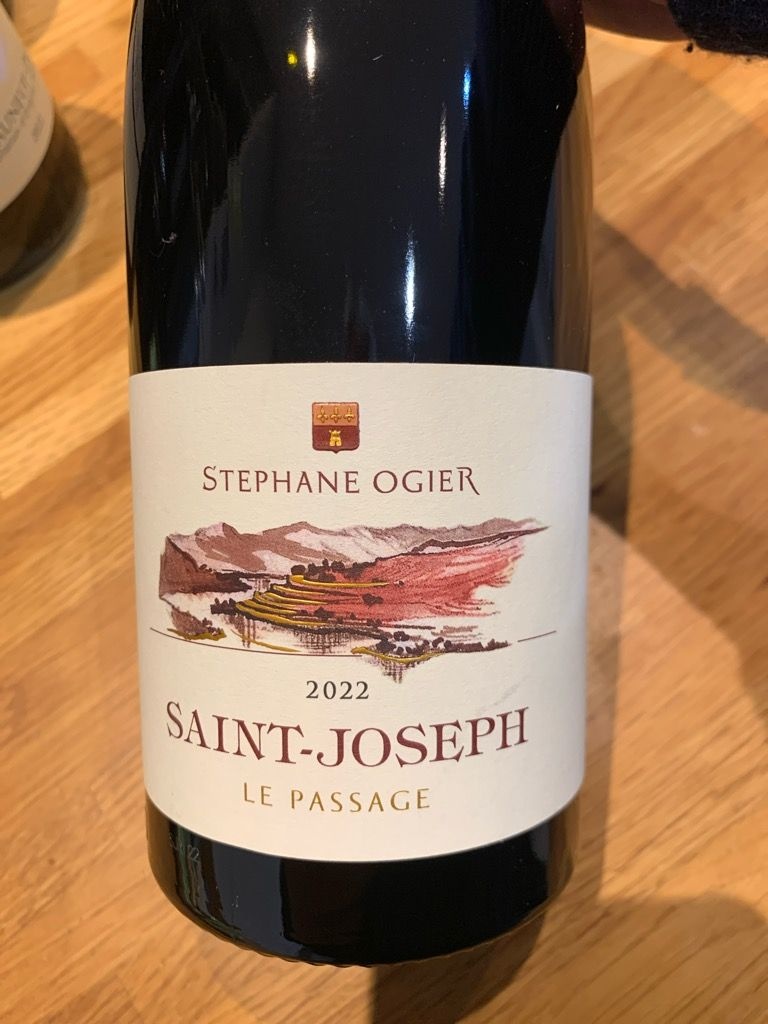
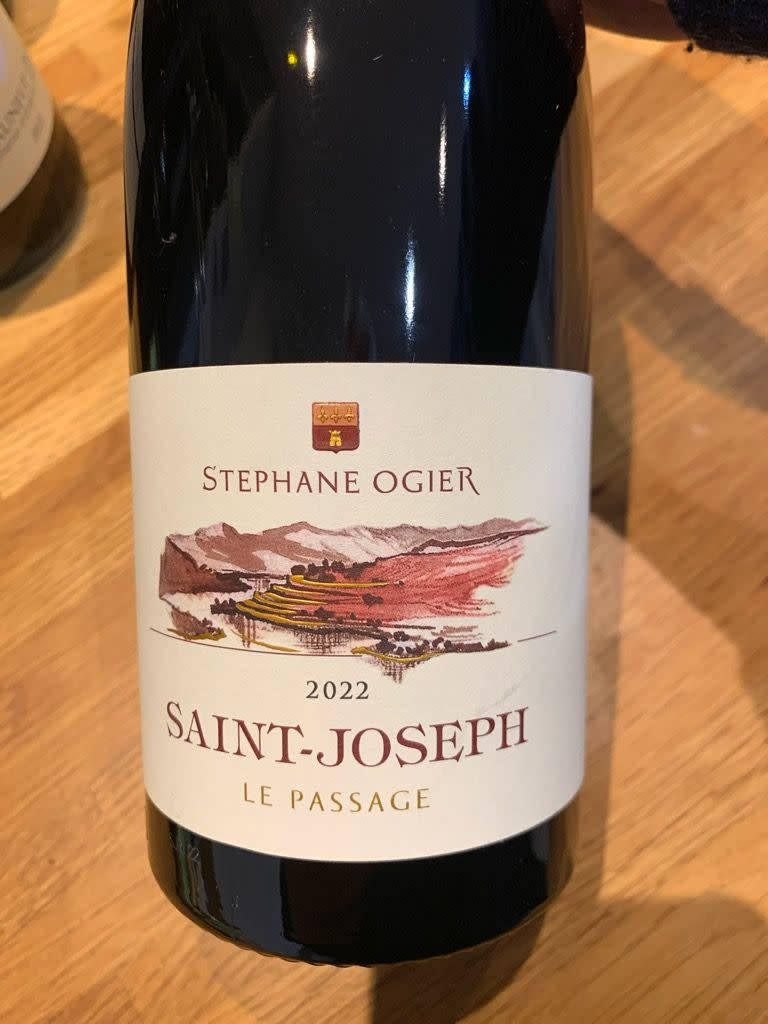
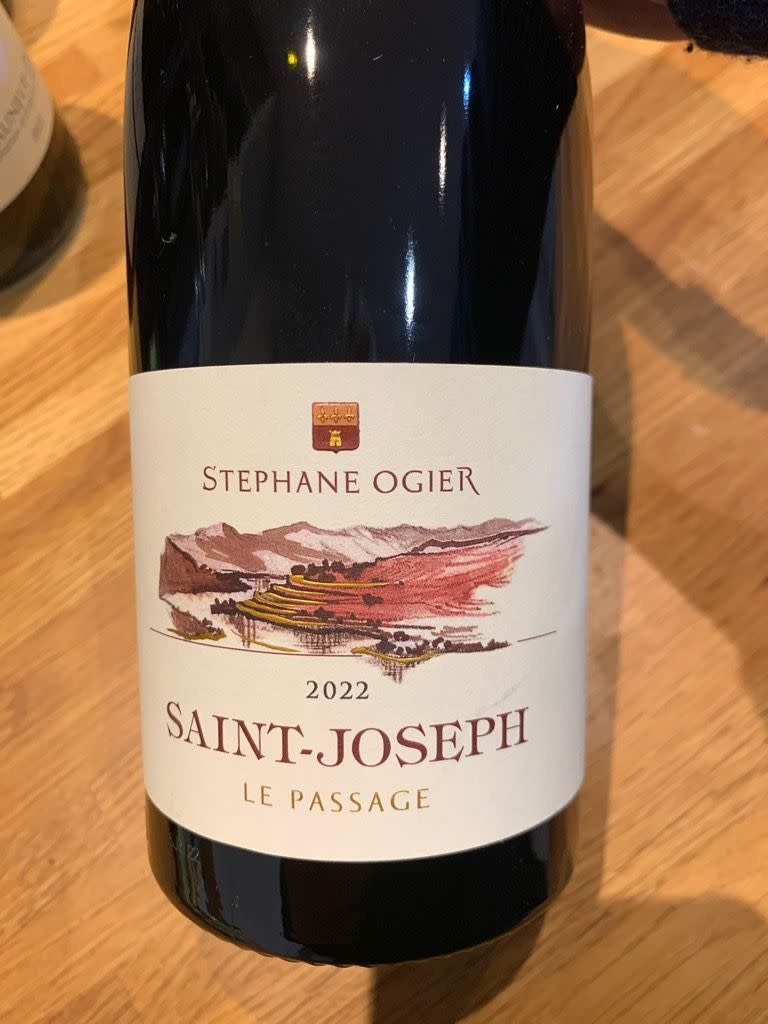
Domaine François Villard Saint-Joseph “Le Passage” 2022 is a Northern Rhône Syrah showing blackberry, black cherry, blueberry, violet, black pepper, olive tapenade, smoke and licorice.
Medium to full-bodied with fine, structured tannins and vibrant acidity, it balances ripe dark fruit with savory, peppery complexity and a distinct granite mineral edge. The palate is layered and focused, finishing long, spicy and slightly smoky with good aging potential.
Professional ratings
- 92–94 pts – James Suckling: notes peppery Syrah character, dark fruit and structure
- 91–93 pts – Wine Advocate: praises balance, purity and terroir expression
- 91–92 pts – Vinous: highlights savory depth, freshness and finesse
- 91–92 pts – Decanter: commends precision, spice and Rhône typicity
Overall, it is rated around 91–94 points, a classic, structured Saint-Joseph combining freshness, peppery spice and age-worthy depth.
Jeb Dunnuck 93 Points
The 2022 Saint Joseph Le Passage brings another level of elegance and finesse, offering ripe red and black fruits, crushed stone, violets, and hints of bacon fat. Medium-bodied, pure, and focused on the palate, it shows an elegant mouthfeel and gorgeous tannins. It’s going to evolve nicely through 2034. Drink 2025-2034.
Stéphane Ogier remains at the top of his game and is unquestionably one of the benchmark producers in Côte Rôtie today. Since officially taking the reins from his father Michel in 2000, he's expanded the estate considerably, constructed a modern winery just outside Ampuis, and built one of the most complete portfolios in the Northern Rhône. Farming now extends across nearly 30 hectares, with vineyards in Côte Rôtie, Seyssuel, Condrieu, Saint Joseph, and the Collines Rhodaniennes. The core lineup of Côte Rôtie releases includes five cuvées that are made in most vintages. Mon Village is the entry point and comes from a mix of sites throughout the appellation, offering a terrific snapshot of the house style as well as plenty of early accessibility. The La Réserve is a step up and is based on selected parcels and always offers a little more density and structure. Given the number of cuvées produced here, I wouldn't be surprised to see these two bottlings eventually merged into a single wine. Lancement comes from a high-elevation site above the Côte Blonde and is always one of the more elegant, floral, and mineral-driven wines in the lineup. The Côte Blonde is a richer, more expressive Syrah that typically includes a touch of Viognier and comes from younger vines planted in 2010. The flagship La Belle Hélène comes from a tiny parcel of old vines in Côte Rozier, just above La Landonne on the Côte Brune. It's the most powerful, structured, and age-worthy of the set and since 2018 has seen no new oak, with its élevage now done entirely in used demi-muids. In addition to those five core wines, Ogier began bottling a series of single-vineyard Côte Rôties starting with the 2012 vintage. The lineup changes slightly each year depending on vintage conditions, but the intent is to showcase the individual personalities of the lieux-dits. These are tiny production releases, and they offer an incredible insight into these individual sites. The cellar approach here is thoughtful and not dogmatic, with stem usage varying by site and vintage, ferments primarily in stainless steel, and the wines aged in used barrels and demi-muids, with no fining or filtration. While the top cuvées understandably get most of the attention, don't overlook the La Rosine, L'Ame Soeur, Saint Joseph, or even his Southern Rhône projects like Le Temps Est Venu. These are beautifully made, classically styled wines that over-deliver across the board.