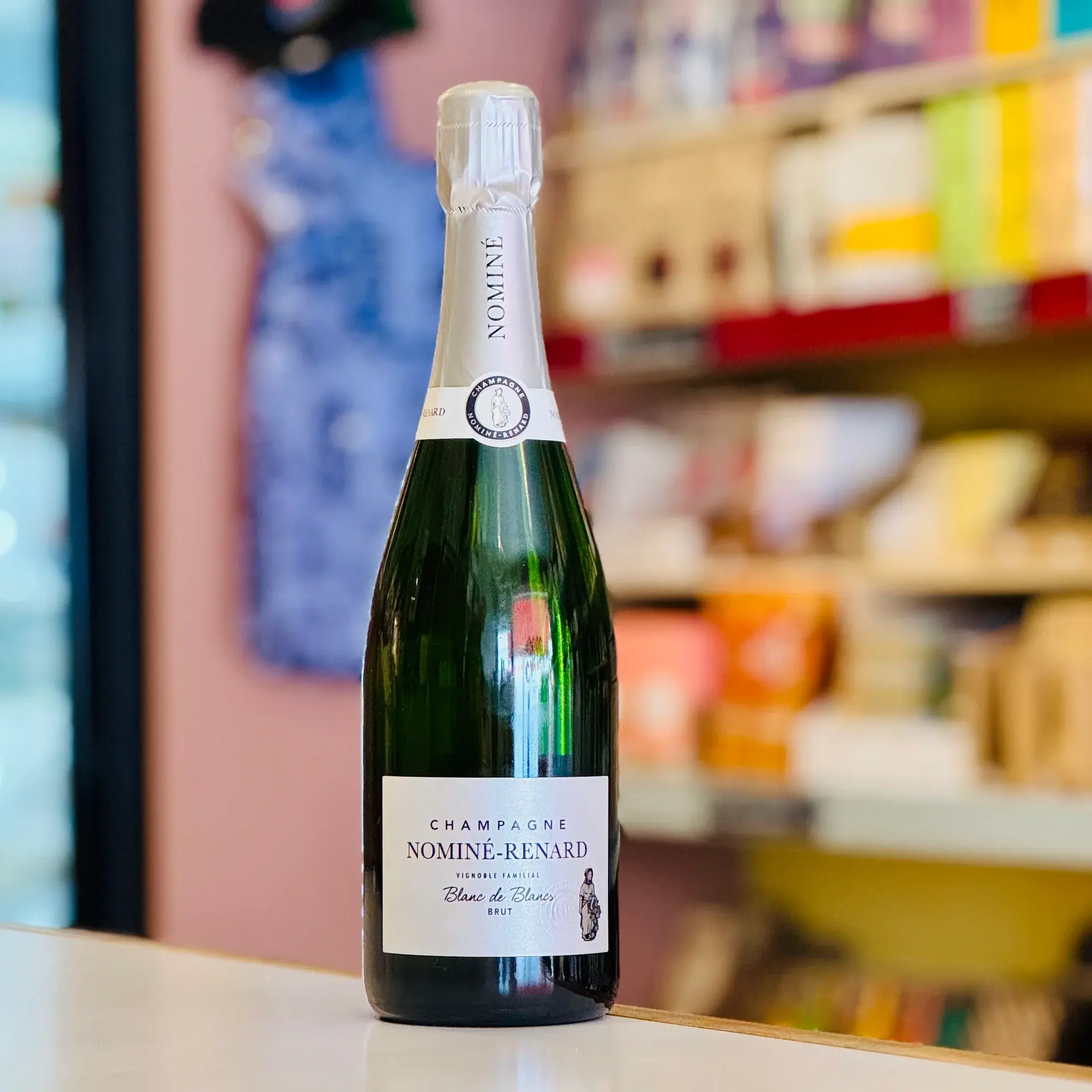
In 1960, Germaine Renard and her husband, André Nominé started their own winery.
They christened it ‘Champagne Nominé-Renard.’ Germaine and André proceeded to
have four children. Claude, the eldest, joined the family business after studying
oenology. Today, his son, Simon Nominé, is at the head of the family house and
represents the third generation of Champagne winegrowers.
The Nomine family owns their 20-hectare estate, spread across six villages, with 36
plots. They are in Passy-Grigny, Charly sur Marne, Etoges, Villevenard, Broyes and
Allemant. All their vineyards are certified sustainable, as the family is passionate about
taking care of the environment and using the least amount of intervention possible.
The Nominé family is classified as an Independent Grower, or Recoltant Manipulant,
which means they manage the production from the land to the bottle. They own their
own vineyards, harvest and press their own grapes, and fully produce their own
namesake Champagne. They have full control, ground to glass. You’ll see each bottle is
marked with the RM designation.
They produce approximately 100,000 bottles annually made from a blend of
Chardonnay, Pinot Noir and Pinot Meunier. Each plot is vinified separately before
blending to keep the identity of each terroir. The greatest diversity of wines gives more
flexibility for blending. The characteristic of Champagne is to produce and maintain a
unique and constant style, year after year, despite the variation of climate and harvest.
The art of the blend is to maintain the identity of each cuvee.
Growing vines is working with the environment all year round. Therefore, we are
naturally involved in sustainable viticulture, which requires special attention to our land
to preserve its biodiversity and the quality of the chalky, limestone and silica soil.
The wine undergoes alcoholic and malolactic fermentation in thermoregulated stainless
steel tanks. Tartaric stabilization occurs at -4oC for 12 hours and then filtered using
diatomaceous earth. The finished wine has aromas of brioche, honey with notes of fresh
wildflowers. The minerality and complexity give this wine a 10-year cellaring potential.